
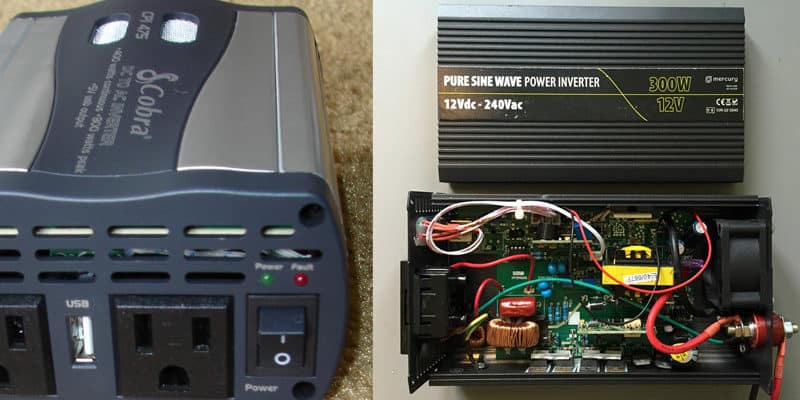
Updated March 2026 — An AC power inverter is the heart of any off-grid solar or wind power system, converting DC battery energy into AC power for your electronics and appliances. Whether you’re building a DIY cabin setup, RV solar system, or emergency backup station, choosing the right inverter determines what you can power and how reliably. This updated guide covers the best off-grid inverters currently available, from budget-friendly modified sine wave models to premium pure sine wave units.
- What it is: Power inverters convert DC battery power to AC for household appliances, available in modified sine wave (budget) and pure sine wave (premium) types.
- Price range: $50–$400 for most consumer models, with high-capacity 3000W+ units reaching $500–$800.
- Biggest pro: Modern inverters offer multiple safety features, pure sine wave options for sensitive electronics, and compact designs suitable for RVs, cabins, and camping.
- Biggest caveat: Modified sine wave inverters are cheaper but can damage sensitive electronics; pure sine wave is recommended for anything with motors or microprocessors.
Off Grid Power Inverters Overview
An AC power inverter is essential for any off-grid solar, wind, or hybrid power system. It converts the DC current stored in your battery bank into standard 110–120V AC power, allowing you to run household appliances, tools, and electronics. Without an inverter, your solar panels or wind turbine would only charge batteries with no way to power standard devices.

Inverters come in two main types: modified sine wave (budget-friendly, simpler design) and pure sine wave (advanced waveform that’s safe for all electronics). While modified sine wave models work fine for basic appliances like lights and power tools, pure sine wave inverters are highly recommended for anything with motors, microprocessors, or sensitive electronics—think laptops, CPAP machines, medical devices, and modern appliances.
The market has evolved significantly since 2022. Today’s inverters feature advanced safety protections, multiple AC and USB outlets, cooling fans with intelligent speed control, LED displays showing real-time voltage and power output, and compact aluminum housings that resist weather and rough handling.
Key Features and Specifications
When shopping for an off-grid inverter, focus on these critical specs:
| Power Rating | Continuous output (e.g., 750W, 2000W) and surge/Peak power (typically 2x continuous for starting motors) |
| Waveform Type | Modified sine wave (budget) or Pure sine wave (premium, recommended) |
| Battery Voltage | 12V (most common), 24V, or 48V systems—match your battery bank |
| AC Outlets | Typically 2–4 standard 110V sockets, plus USB ports (3.1A fast charge) |
| Safety Features | Overload protection, short circuit protection, overheating shutdown, low voltage alarm |
| Cooling System | Intelligent fan control with temperature sensors and high-speed mode under load |
| Efficiency | 90–95% typical conversion efficiency (higher = less wasted energy) |
| Warranty | 1–3 years standard, some brands offer extended coverage |
[Product/Topic] Overview
1. Ampeak 750W Power Inverter
The Ampeak 750W inverter remains a popular choice for small off-grid setups, available in 100W, 400W, and 750W variants. This modified sine wave model features dual three-pronged 110V AC outlets and two 3.1A USB ports for charging modern devices.
Current pricing: ~$50–$70 on Amazon. Safety features: Replaceable 35A mini slip fuses, overload/overheat/short circuit protection. Size: 5.2 x 8.1 x 2.2 inches, weighing just 1.5 lbs—ideal for road trips and compact RV setups.
2. Bestek 2000W Power Inverter
Bestek continues to be a leading brand in the power inverter market, with models ranging from 500W to 2000W. The 2000W model (2300W max) features three full-size AC sockets, six 50A fuses for enhanced safety, and an overload alarm with LED indication.
The red-colored unit includes a carrying handle for portability, making it perfect for outdoor applications, RVs, trailers, boats, and home backup. The high-speed cooling fan and power switch add convenience, while durable materials ensure it withstands tough weather conditions.
Current pricing: ~$150–$200. Surge capacity: 4600W for starting motors and high-draw appliances.
3. Renogy 2000W Pure Sine Wave Inverter
Renogy, a famous vendor of off-grid solar power solutions, offers this 2000W pure sine wave inverter with waveform technology for minimal harmonic distortion. It’s a premium choice that’s often included in Renogy solar kits but can be purchased separately.
The inverter features overload protection for both AC output and DC input, two high-speed cooling fans, and LED warning indicators. With four 110V AC sockets, it’s ideal for households, RVs, trailers, and remote cabins. Renogy continues to support this model in 2025/2026 with updated firmware and improved cooling systems.
Current pricing: ~$200–$280. Surge capacity: 4000W.
4. WindyNation VertaMax 3000W Inverter
The WindyNation VertaMax 3000W is a top-selling modified sine wave inverter available in 1200W and 3000W variants. Its golden-colored, stylish design houses three full-size 115V AC sockets, each with an exclusive circuit breaker and control switch.
The LED warning screen lets you monitor battery voltage and operational status. At 3000W continuous output (6000W surge), it can run TVs, laptops, microwaves, and medical equipment. As a modified sine wave model, it’s remarkably cheaper than pure sine wave alternatives—perfect for budget-conscious buyers powering basic appliances.
Current pricing: ~$180–$250.
5. Energizer 1500W Modified Sine Wave Inverter
Energizer offers inverters from 100W to 4000W, including both pure and modified sine wave options. The 1500W model features dual 110V AC sockets, USB outlets, and durable construction that resists tough outdoor conditions.
The cooling fan safeguards against overheating, making it suitable for camping tents, RVs, boats, and emergency backup. Energizer remains an active brand in 2025/2026 with updated models featuring improved efficiency and safety features.
Current pricing: ~$100–$150.
6. Giandel 5000W Heavy-Duty Power Inverter
The Giandel 5000W inverter is a large, heavy-duty model for high-power off-grid systems. With 10000W surge capacity, four AC sockets, one 2.4A USB port, and a remote controller for wireless operation, it’s ideal for running nearly all essential AC appliances.
Gian德尔 also sells a 3000W variant (6000W surge) for smaller systems. The durable aluminum alloy housing ensures safety on outdoor trips, and the unit is available in multiple power variants from 2000W to 5000W.
Current pricing: ~$350–$450.
7. Go Power 3000W Modified Wave Inverter
The Go Power 3000W is one of the most popular budget inverters, offering 3000W continuous power (6000W peak) on modified sine wave technology. Its durable aluminum shell and multiple AC sockets make it perfect for outdoor off-grid systems.
All essential security features protect against short circuits, overvoltage, and overheating. Go Power continues to support this model with improved cooling systems in 2025/2026.
Current pricing: ~$150–$200.
8. WZRELB 3000W Off Grid Power Inverter
The WZRELB 3000W pure sine wave inverter is available for both 12V and 24V systems, with power options from 2000W to 5000W. It features dual 120V AC sockets, a cooling fan, earth connection for output and PCB board security, and true copper inductance for enhanced performance.
The solid aluminum casing makes it perfect for RVs, trailers, campers, tents, remote cabins, and home backup. Pure sine wave output ensures enhanced safety for all appliances.
Current pricing: ~$200–$300.
9. Edecoa 1500W Power Inverter
The Edecoa 1500W pure sine wave inverter features three full-size AC sockets, a remote controller, and an extended LED display showing operational data. Built with aluminum and quality plastic, it includes built-in fan control, automatic voltage regulation, and intelligent power management.
Current pricing: ~$120–$180.
10. Energizer 4000W Modified Sine Wave Inverter
The Energizer 4000W is the higher-end variant of Energizer’s inverter lineup, featuring dual AC sockets and multiple 2.4A USB ports. The strong, solid case has a stylish mesh-like design and includes all standard safety measures: overload protection, short circuit prevention, overheating shutdown.
This is a MATLab-approved power inverter for quality, performance, and safety. Energizer continues to support this model with updated firmware in 2025/2026.
Current pricing: ~$250–$350.
How It Works / Performance
Power inverters work by converting DC (direct current) electricity from your battery bank into AC (alternating current) that standard household appliances require. The process involves:
- DC Input: Connect the inverter to your 12V, 24V, or 48V battery bank using heavy-gauge cables.
- Inversion: Internal circuitry converts DC to AC at 60Hz (US standard) or 50Hz (international).
- Waveform Shaping: Modified sine wave inverters create a stepped approximation of AC; pure sine wave units produce smooth, clean power identical to grid electricity.
- AC Output: Plug appliances into the inverter’s AC sockets to draw power.
- Safety Monitoring: Modern inverters continuously monitor voltage, temperature, and load, shutting down automatically if issues arise.
Efficiency ratings typically range from 90–95%, meaning 5–10% of energy is lost as heat during conversion. Higher efficiency = less wasted energy and longer battery runtime.
Pros and Cons
What We Like
- Wide Price Range: Options from $50 to $800+ fit any budget.
- Multiple Safety Features: Modern inverters include overload, overheat, and short circuit protection.
- Pure Sine Wave Options: Safe for all electronics, including sensitive medical devices and laptops.
- Versatile Applications: Perfect for RVs, cabins, boats, camping, and home backup.
- Compact Designs: Many models are lightweight and portable for outdoor use.
What Could Be Better
- Modified Sine Wave Limitations: Can damage or malfunction with sensitive electronics and motors.
- Cooling Fan Noise: Some units can be loud under heavy load.
- Cable Quality: Many inverters include only basic cables; heavy-gauge cables may need separate purchase.
- No Built-in USB-C PD: Most models lack modern 100W USB-C Power Delivery ports.
Alternatives Worth Considering
1. Victron Energy Blue Smart Inverter (1000W–3000W) — Premium European brand with pure sine wave, Bluetooth monitoring, and 5-year warranty. ~$400–$700.
2. AIMS Power Pure Sine Wave Inverters — Industrial-grade reliability, available in 12V/24V/48V systems. ~$300–$600.
3. GOOLOO 2000W Pure Sine Wave — Budget-friendly pure sine wave option with modern USB-C PD ports. ~$180–$250.
Who Should Buy This?
Purchase a power inverter if you:
- Have an off-grid solar or wind power system with battery storage.
- Need to run household appliances, tools, or electronics from DC batteries.
- Want backup power for RVs, cabins, boats, or emergency situations.
- Require pure sine wave for sensitive electronics (laptops, medical devices, modern appliances).
Consider modified sine wave if you:
- Are on a tight budget ($50–$150 range).
- Only need to power basic appliances (lights, fans, power tools without electronics).
- Don’t mind the limitations with sensitive devices.
Final Verdict
Power inverters remain essential components of off-grid solar and wind power systems in 2025/2026. For most users, we recommend investing in a pure sine wave inverter from reputable brands like Renogy, Energizer, or Bestek—despite the higher upfront cost, they provide safer, more reliable power for all your electronics. Budget-conscious buyers can still find excellent modified sine wave options from Ampeak, WindyNation, and Go Power that handle basic appliances effectively.
Our top pick: The Renogy 2000W Pure Sine Wave Inverter offers the best balance of power, safety features, and value at ~$200–$280. For smaller setups, the Ampeak 750W remains a solid budget choice at ~$50–$70.
Frequently Asked Questions
Modified sine wave inverters produce a stepped approximation of AC power and are cheaper, but can damage sensitive electronics. Pure sine wave inverters produce smooth, clean power identical to grid electricity and are safe for all devices including laptops, medical equipment, and modern appliances. Pure sine wave is recommended for anything with motors or microprocessors.
Choose an inverter with continuous power rating that exceeds your total appliance wattage. For example, if you need to run a 100W TV, 50W laptop, and 300W microwave simultaneously (450W total), get at least a 750W inverter. Also consider surge power—inverters typically have 2x surge capacity for starting motors and high-draw appliances.
Modern inverters include: overload protection (shuts down if you exceed capacity), short circuit protection, overheating shutdown with intelligent fan control, low voltage alarm (protects batteries from deep discharge), and replaceable fuses. Pure sine wave inverters also provide cleaner power that reduces stress on your appliances.
Most quality inverters achieve 90–95% conversion efficiency, meaning 5–10% of energy is lost as heat. Efficiency depends on load (inverters are most efficient at 50–70% capacity), cable quality (use heavy-gauge cables to minimize voltage drop), and ventilation (ensure adequate airflow for cooling). Higher efficiency = longer battery runtime.
Choose based on your battery bank capacity and power needs. 12V systems work for up to ~1000W continuous power, 24V for 1000–3000W, and 48V for larger home backup systems. Higher voltage = less current draw = thinner cables and better efficiency for high-power applications.
Most consumer inverters come with 1–3 year warranties. Premium brands like Victron Energy offer 5-year warranties. Always register your product and keep receipts. Reputable brands (Renogy, Energizer, Bestek, Ampeak) honor warranties for manufacturing defects and component failures.
Pure sine wave inverters produce smooth, clean power identical to grid electricity. They’re safe for all electronics including laptops, CPAP machines, medical devices, modern appliances with microprocessors, and motors. Modified sine wave can cause humming, overheating, or damage to sensitive electronics over time.

Robert DeWitt writes about off-grid power gear for Off Grid Power Boom. Based in Arizona, he uses portable power stations, solar panels, and battery systems regularly in extreme heat—focusing on practical runtime, charging speed, reliability, and real-world usability for camping, RV trips, and home backup.
Editorial focus: portable power stations & solar generators, solar panel setups, batteries/inverters, and off-grid preparedness.