
Last updated: September 22, 2026
Researched from manufacturer pages, September 21, 2026. Not a lab test. We did not run these systems. Watt-hour and watt figures below are the makers’ published numbers. Stock and street prices change — check the maker page before you buy.
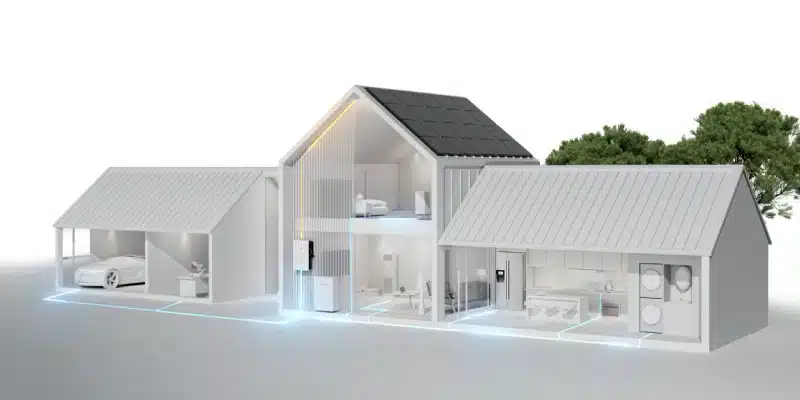
A solar battery backup for home (also called a home battery backup or home solar battery bank) stores electricity so you can keep critical loads running when the grid drops, and so daytime solar can cover evening use instead of being wasted or sold at a poor rate. People searching for the “best solar battery backup system for home” usually want that job explained honestly — not a numbered vanity ranking of products we never tested.
This page is a practical guide: what the gear is for, whole-home vs expandable portable stations, how to size, named manufacturer examples from catalogs we can still check, and safety. It is not a ranked “best of” list. Specs come from maker pages; we do not invent watt-hours or overnight runtimes.
What home battery backup is for
Two jobs show up again and again:
- Outage backup — keep fridge, lights, well pump, medical gear, internet, and selected circuits alive when utility power fails.
- Solar self-consumption — store surplus PV during the day and discharge at night or during peak rates, instead of exporting everything to the grid.
A gas generator can cover long outages too, but it needs fuel, ventilation, and maintenance. Battery systems are quiet, indoor-friendlier when designed for it, and pair cleanly with solar. Cost and install complexity are usually higher up front. For how on-grid and off-grid home battery setups differ, see our off-grid vs on-grid home battery systems guide. Broader backup-battery orientation: solar backup batteries guide.
Types: whole-home ESS vs expandable stations
Whole-home / residential energy storage (ESS)
These are inverter-plus-battery stacks meant to wire into a home panel or subpanel (often with a smart gateway or automatic transfer). They are usually installed by a licensed electrician. Examples in the named list below include BLUETTI’s EP900 path and Mango Power M. Output is often split-phase 120/240 V at multi-kilowatt continuous ratings so both small loads and larger 240 V appliances can be covered when the system is sized for them.
Expandable portable / semi-portable power stations
These start as a wheeled or movable base unit with AC outlets. You add expansion batteries and, for whole-house use, a maker home panel or a properly installed transfer switch. Zendure SuperBase V and EcoFlow’s DELTA Pro family sit in this lane. They are easier to buy retail and grow over time, but a true whole-home hookup still needs correct transfer equipment and often a pro install.
When to lean whole-home ESS: you want panel-tied backup, high continuous 240 V, and a permanent install. When to lean expandable stations: you want plug-in essentials first, RV/jobsite flexibility, or a path that can grow into a home panel later.
Sizing pointers (before you pick a brand)
- List essential watts — continuous and surge (fridge compressor, well pump, furnace blower, microwave). Peak surge matters as much as average draw.
- Estimate watt-hours per day — arithmetic only: device watts × hours you need them. That is not a lab test; real inverter and cable losses reduce what you get from a stated Wh pack.
- Decide backup hours vs days — overnight lights + fridge is a different budget than multi-day whole-house comfort including HVAC.
- Match solar input — if the grid stays down, you need enough PV (and charge controller/inverter headroom) to refill the bank. Start with how to size a solar power system for your home.
- Job-specific loads — medical CPAP and fridge/freezer each have their own math: CPAP backup battery sizing and fridge/freezer runtime.
Named examples (maker specs, not a ranking)
These four showed up on Boom’s earlier 2023 coverage of this slug. They are examples of product classes, not places 1–4. Order is alphabetical by brand. Availability and pricing move — treat Status as a snapshot from September 21, 2026 research, not a guarantee.
| System | Class | Maker capacity / power (published) | Status (Sep 21, 2026) | Source |
|---|---|---|---|---|
| BLUETTI EP900 + B500 | Whole-home ESS | B500 4,960 Wh rated (usable 4,464 Wh); 2–4 packs → 9.9–19.8 kWh; inverter up to 9,000 W ( 7,600 W off-grid with 2× B500); max PV 9 kW | EP900 page live; B500 US listing shows Discontinued / Out of Stock — confirm current bundles with BLUETTI | EP900, B500 |
| EcoFlow DELTA Pro / Ultra | Expandable station → home panel | Original DELTA Pro base 3,600 Wh / 3,600 W (X-Boost to 4,500 W); ecosystem claims up to ~25 kWh. DELTA Pro Ultra battery 6,144 Wh, inverter 7,200 W; maker system scale 6–90 kWh / 7.2–21.6 kW | Original Pro still listed on US site (aging line); Ultra is the current whole-home modular path | DELTA Pro, DELTA Pro Ultra |
| Mango Power M | Whole-home ESS | 12 kW continuous / 24 kW peak (500 ms); base 15–20 kWh; expand toward 80 kWh per maker docs; PV up to 18 kW; CATL LFP | Spec and product pages still published; verify live stock and install path with Mango Power | Product, Specs |
| Zendure SuperBase V | Expandable station + Home Panel | V6400 6,438 Wh (semi-solid) or V4600 4,608 Wh (LFP); 3,800 W rated / 5,000 W peak; two units 7,600 W; max advertised 64 kWh; solar up to 3,000 W | Still listed; many US V6400 configs Sold Out on check — soft availability | SuperBase V |
BLUETTI EP900 + B500
BLUETTI markets the EP900 as a residential energy storage inverter for 120/240 V with modular B500 LiFePO₄ packs. On the EP900 page, each B500 is 4,960 Wh rated (4,464 Wh usable at 90% DoD). Two to four packs give about 9.9–19.8 kWh on one inverter; dual-inverter configs are advertised up to 39.6 kWh. Continuous output is up to 9,000 W on-grid; BLUETTI notes 7,600 W off-grid with only two B500s. Max solar input is listed at 9 kW.
Honesty check (Sep 21, 2026): the standalone B500 product page shows Discontinued and Out of Stock. Do not assume every EP900 bundle is still a click-to-ship retail kit. Ask BLUETTI (or a certified installer) what is actually shipping. Soft price only — list prices move.
EcoFlow DELTA Pro (and Ultra)
The original DELTA Pro is a portable LFP station: base 3,600 Wh, 3,600 W AC (4,500 W with X-Boost), expandable with Extra Batteries and home-panel accessories. EcoFlow’s own materials describe whole-home kits built around pairing units and a Smart Home Panel, with capacity claims up to about 25 kWh in the expanded ecosystem.
For new whole-home shopping in 2026, EcoFlow also sells DELTA Pro Ultra: battery block 6,144 Wh, inverter 7,200 W (120/240 V), with maker claims of system scale to 90 kWh and 21.6 kW when multiple inverters are combined with Smart Home Panel 2. We are not ranking Ultra above or below the others — it is the clearer current EcoFlow whole-home path next to the aging original Pro.
Mango Power M
Mango Power M is an all-in-one whole-home hybrid: integrated inverter, cabinet, and CATL LFP packs. Maker specs list 12 kW continuous AC output and 24 kW peak for 500 ms, base storage around 15–20 kWh, expansion toward 80 kWh on the documented cabinet path, and PV input up to 18 kW. See the spec page and product page.
Expect a licensed install. Soft price: historical US list bundles have appeared in the roughly $20k range on maker pages — confirm live pricing and whether your region still has inventory or installer coverage. Mango’s site also promotes portable products (for example Power E); do not confuse those with the M whole-home stack.
Zendure SuperBase V
Per Zendure US, SuperBase V comes as V6400 (6,438 Wh semi-solid-state) or V4600 (4,608 Wh LiFePO₄). Rated AC is 3,800 W (peak 5,000 W); two matched units can reach 7,600 W via ZenY cable or Home Panel. Zendure advertises scaling to 64 kWh with two V6400 bases and eight Satellite batteries, and up to 3,000 W solar on the XT90 path.
On our September 21, 2026 check, many US V6400 configurations showed Sold Out. Treat that as soft availability: the product line is still marketed, but you may wait or take a different config. Home Panel install should be done by a qualified electrician.
Safety: transfer switches and interconnection
Do not backfeed a home panel with a generator inlet or a portable station through a dryer outlet. Use a properly rated transfer switch or an interlocking kit that meets your jurisdiction’s rules. For portable generator and station transfer practice, read our transfer switch safety guide (UL 1008).
Whole-home ESS products (EP900, Mango Power M, EcoFlow Smart Home Panel paths, Zendure Home Panel) assume professional electrical work, correct grounding, and utility/AHJ rules for grid-tied systems. Manufacturer pages are not a substitute for local code or a licensed electrician.
Related how-to on Boom
- Solar backup batteries guide
- Off-grid vs on-grid home battery systems
- How to size a solar power system for your home
- Transfer switch safety (UL 1008)
- How to size a CPAP backup battery
- How to size a battery for a fridge/freezer
FAQ
What is a home solar battery bank?
It is a rechargeable battery (or stack of batteries) plus an inverter/charger that stores electricity from solar panels and/or the grid for later use. “Bank” just means the storage capacity side of the system — measured in watt-hours or kilowatt-hours — not a separate product category from home battery backup.
What is a battery backup system for home?
A battery backup system keeps selected circuits or the whole house powered when the utility fails. It may be a hardwired ESS, or expandable portable stations tied in through a transfer switch or maker home panel. Solar is optional for the backup job itself, but solar is what recharges the bank during a long outage.
Is there a single “best solar battery backup system for home”?
Not from us. The right system depends on essential load watts, hours of backup, whether you need native 240 V, solar already on the roof, budget, and local install rules. We refuse fake ranked “best” lists when we have not lab-tested the products. Use maker Wh/W numbers and a load list instead.
Whole-home battery or a big portable power station?
If you need many circuits, large 240 V loads, and seamless transfer, lean toward a whole-home ESS or a portable ecosystem with a proper home panel. If you mainly need fridge, lights, routers, and medical devices on extension cords or a small transfer switch, an expandable station can be enough. See the types section above.
Do I need a transfer switch?
For any setup that connects to house wiring, yes — or an equivalent interlocking/ATS solution your electrician and AHJ accept. Plug-only use of a station’s outlets does not need a transfer switch, but it also does not power hardwired circuits. Details: transfer switch safety.

Robert DeWitt writes about off-grid power gear for Off Grid Power Boom. Based in Arizona, he uses portable power stations, solar panels, and battery systems regularly in extreme heat—focusing on practical runtime, charging speed, reliability, and real-world usability for camping, RV trips, and home backup.
Editorial focus: portable power stations & solar generators, solar panel setups, batteries/inverters, and off-grid preparedness.