
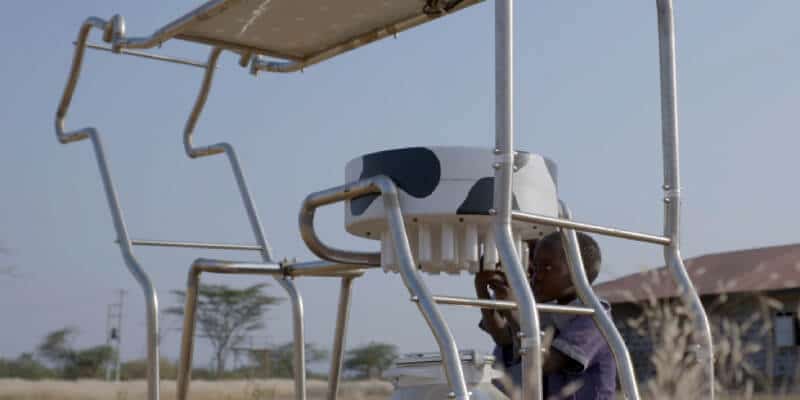
Updated March 2026 — The Solar Milk solar light and power bank is not your typical off-grid gadget. Created by Korean design company YOLK, this small portable device is at the heart of one of the most innovative social projects in the solar industry. Whether you are exploring ways to support solar energy in developing nations or looking for inspiration on how solar lights can genuinely change lives, the Solar Milk story is one worth knowing. It proves that sometimes, buying and supporting the right solar products can do far more than keep your phone charged on a camping trip.
- Solar Milk is a portable solar light and power bank made by YOLK, distributed primarily through the Solar Cow social project to combat child labor in Africa and Asia.
- In Arusha, Tanzania, school attendance increased by 11.4% after Solar Cow stations were installed, and study hours rose dramatically.
- The device combines an LED flashlight, radio/MP3 player, SD card slot for educational content, and USB charging in one compact unit.
- Solar Milk is not widely available as a standalone consumer product — it is mainly distributed through the Solar Cow project at schools in developing countries.
Solar Milk Solar Light and Power Bank Overview
YOLK is a Seoul-based design and solar technology company founded by Sung Un Chang, a design graduate from the School of the Art Institute of Chicago. YOLK is best known in the consumer market for its ultra-thin Solar Paper portable solar charger, but the company’s most ambitious creation is the Solar Milk — a purpose-built solar light and power bank designed to bring electricity to families living off the grid in some of the world’s poorest regions.
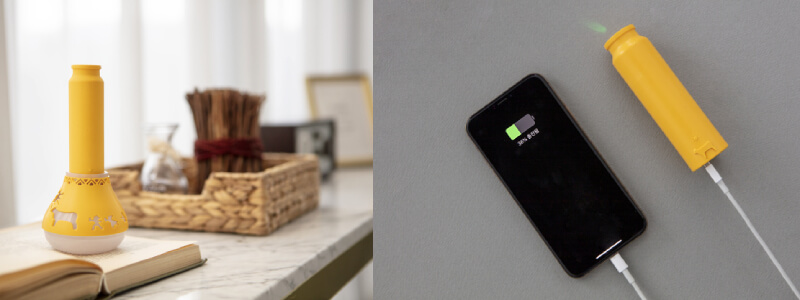
The Solar Milk device is compact and portable, shaped to slot into cow-shaped solar charging stations installed at schools across Africa and Asia. Students charge their Solar Milk units during the school day, then carry them home to provide light, charge phones, and even access educational audio content. It is a brilliantly simple concept with life-changing results.
The product won the prestigious iF Design Award in 2024 as well as a Seoul Design Award, recognizing both its innovative design and its powerful social impact. YOLK continues to operate and expand the project as of 2025-2026.
Key Features and Specifications
Solar Milk packs a surprising number of features into a small, rugged form factor. Here is what is verified about the device:
| Feature | Details |
| Built-in LED Flashlight | Provides reliable light for studying and household tasks after dark |
| Radio / MP3 Player | Built-in radio and audio playback for news and entertainment |
| SD Card Slot | Supports SD cards loaded with educational content for students |
| USB Charging Output | Power bank function allows charging phones and small devices |
| Custom Security PIN | Each unit is PIN-protected so only the assigned student can use it |
| Portable Form Factor | Lightweight and compact — designed for children to carry daily |
| Charging Method | Charges via Solar Cow station at school during class hours |
| Awards | iF Design Award 2024, Seoul Design Award |
The security PIN feature is particularly clever. It ensures that each Solar Milk battery is tied to a specific student, which means the child must physically attend school to charge it. This directly links school attendance to access to electricity at home.
The Solar Cow Project: How It Works
The Solar Cow project is the larger social initiative that makes Solar Milk possible. Here is the concept: YOLK installs a large, cow-shaped solar charging station at a school in an off-grid community. The station is covered in solar panels and has slots where students plug in their individual Solar Milk batteries each morning.
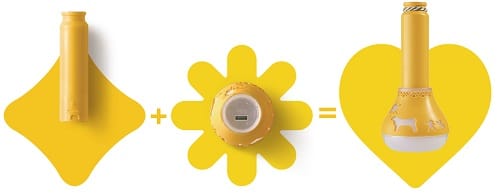
While students attend class, their batteries charge using solar energy. At the end of the school day, they unplug their fully charged Solar Milk units and take them home. The family then uses the stored energy for lighting, phone charging, and listening to radio or educational audio content. Each installation costs approximately $30,000 to $34,000 per school.
The genius of the system is the incentive structure. In many off-grid communities, children are pulled out of school to work — often to earn money that the family then spends on kerosene for lighting or fees to charge mobile phones. By providing free electricity through school attendance, the Solar Cow project removes a major economic reason for child labor.
Real-World Impact
The numbers behind the Solar Cow project are genuinely impressive. In Arusha, Tanzania, school attendance increased by 11.4% after a Solar Cow station was installed. The percentage of households where children studied more than two hours per day jumped from just 9.9% to 48% — a nearly fivefold increase.
Families in off-grid communities often spend roughly 20% of their income on private phone charging and kerosene for lighting. Solar Cow eliminates that expense entirely. Research found that 83% of families were able to redirect savings toward purchasing school stationery and other essentials for their children.
As of 2025-2026, the project has expanded to multiple countries including Kenya, Tanzania, the Democratic Republic of Congo, Cambodia, and Indonesia. Each new installation brings the same proven model: free solar energy in exchange for school attendance. The results have been consistent across regions, demonstrating that the concept works in diverse cultural and economic settings.
Pros and Cons
What We Like
- Powerful social impact — directly increases school attendance and reduces child labor in off-grid communities.
- Multi-function device — combines an LED flashlight, power bank, radio, MP3 player, and educational content player in one unit.
- Clever incentive design — the PIN-based security system ties electricity access to school attendance, creating a strong motivation for families.
- Replaces kerosene and paid charging — families save up to 20% of their income previously spent on energy costs.
- Award-winning design — recognized with the iF Design Award 2024 and Seoul Design Award for innovation and impact.
What Could Be Better
- Not available as a consumer product — you cannot easily purchase a Solar Milk unit for personal use; distribution is primarily through the Solar Cow project.
- Limited battery capacity — designed for basic lighting and phone charging rather than powering larger devices.
- Dependent on school infrastructure — the device requires a Solar Cow station to charge, so it does not function as a standalone solar product.
- Limited deployment scale — while expanding, the project still reaches a relatively small number of schools compared to the global need.
Similar Solar Lights and Power Banks for Off-Grid Use
Since Solar Milk is not available as a consumer product, here are some excellent solar lights and power banks you can actually buy for off-grid use, camping, or emergency preparedness:
BioLite SunLight (~$25) — A compact, clip-on solar light with an integrated solar panel and USB charging. It offers multiple color modes and is great for hanging in a tent or around camp. A solid everyday solar light.
Goal Zero Lighthouse Micro (~$30) — A tiny but powerful LED lantern with a built-in rechargeable battery that can also charge via USB. It provides up to 150 lumens of light and has a convenient hanging hook. One of the best micro lanterns on the market.
MPOWERD Luci Solar Light (~$20) — An inflatable, waterproof solar lantern that is incredibly packable. It charges in direct sunlight and provides hours of ambient light. Popular with campers, travelers, and for disaster preparedness kits.
If you want to directly support YOLK as a company, consider their consumer product the Solar Paper — an ultra-thin, modular portable solar charger priced between $148 and $450 depending on configuration. They also offer the Solarade at around $96. Purchasing YOLK products supports the company behind the Solar Cow initiative.
Who Is Solar Milk For?
The Solar Milk device is primarily designed for students and families in off-grid communities across Africa and Asia. It is not a product you will find on Amazon or at your local outdoor retailer. The target users are children attending schools where Solar Cow stations have been installed in countries like Kenya, Tanzania, the DRC, Cambodia, and Indonesia.
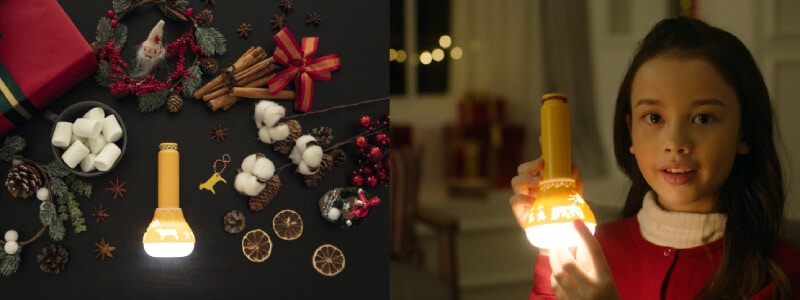
That said, the Solar Milk story is deeply inspiring for anyone interested in off-grid solar technology. It demonstrates what thoughtful product design combined with solar energy can accomplish. If you are passionate about solar power and want to make a difference, consider donating to the Solar Cow project through YOLK’s website at yolkstation.com, or support the brand by purchasing their consumer solar products.
Final Verdict
The Solar Milk solar light and power bank is one of the most meaningful applications of portable solar technology we have ever covered. While you cannot buy one for yourself, the Solar Cow project it belongs to is genuinely transforming lives — increasing school attendance, reducing child labor, and bringing clean light to off-grid families. If you are looking for a solar light or power bank you can purchase today, check out the BioLite SunLight, Goal Zero Lighthouse Micro, or MPOWERD Luci — and consider supporting YOLK by picking up a Solar Paper charger.
Frequently Asked Questions
The Solar Cow project is a social initiative by Korean company YOLK that installs cow-shaped solar charging stations at schools in off-grid communities across Africa and Asia. Students charge portable Solar Milk batteries during the school day and take them home, providing families with free electricity for lighting and phone charging. The project is designed to combat child labor by incentivizing school attendance.
Solar Milk is not widely available as a standalone consumer product. The devices are primarily distributed through the Solar Cow project to students at partner schools in developing countries. However, you can support YOLK by purchasing their consumer products like Solar Paper or Solarade, or by donating to the Solar Cow project through yolkstation.com.
As of 2025-2026, the Solar Cow project has been deployed in Kenya, Tanzania, the Democratic Republic of Congo, Cambodia, and Indonesia. Each installation involves a cow-shaped solar charging station at a school, costing approximately $30,000 to $34,000 per location.
In many off-grid communities, families pull children out of school to work and earn money for basic needs like phone charging and kerosene for lighting. Solar Cow removes this economic pressure by providing free electricity through school attendance. Each student receives a PIN-protected Solar Milk battery that only charges at the school station, creating a direct link between attending class and having electricity at home. In Tanzania, school attendance increased by 11.4% after installation.
YOLK is a Seoul-based solar technology and design company founded by Sung Un Chang. They are best known for the Solar Paper ultra-thin portable solar charger (priced $148-$450) and the Solarade ($96). Their flagship social project is the Solar Cow initiative, which distributes Solar Milk devices to students in off-grid communities. The company has won the iF Design Award 2024 and Seoul Design Award.
The Solar Milk device includes a built-in LED flashlight, a radio and MP3 player, an SD card slot for loading educational content, USB charging output for phones and small devices, and a custom security PIN that ties each unit to an individual student. It is designed to be lightweight and portable enough for children to carry daily.
Yes. Since Solar Milk is not available as a consumer product, great alternatives include the BioLite SunLight (~$25), Goal Zero Lighthouse Micro (~$30), and MPOWERD Luci Solar Light (~$20). These are portable, rechargeable solar lights suitable for camping, emergencies, and off-grid living. Nitecore also makes compact solar-compatible power banks worth considering.

Robert DeWitt writes and tests off-grid power gear for Off Grid Power Boom. Based in Arizona, he uses portable power stations, solar panels, and battery systems regularly in extreme heat—focusing on practical runtime, charging speed, reliability, and real-world usability for camping, RV trips, and home backup.
Editorial focus: portable power stations & solar generators, solar panel setups, batteries/inverters, and off-grid preparedness.