
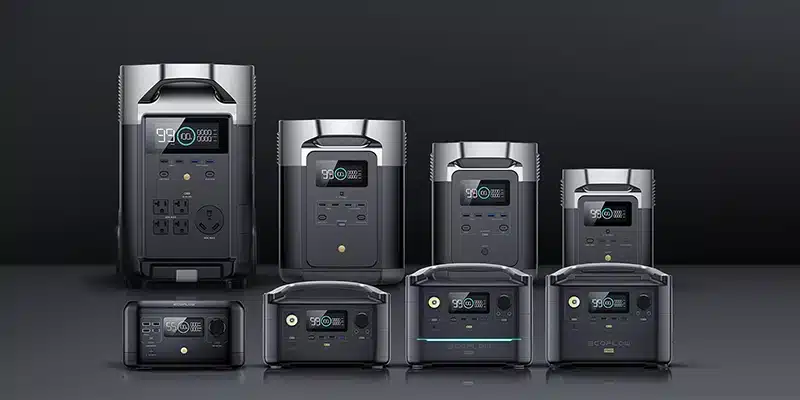
EcoFlow is a global consumer power brand — but yes, it’s a Chinese-founded company. That answer sounds simple, but the details matter if you care about warranty support, data/privacy, parts availability, and where your gear is actually manufactured.
Quick take
- EcoFlow was founded in China (by former DJI engineers) and is headquartered in Shenzhen.
- The brand operates globally with regional storefronts, warehouses, and support teams — but policies can vary by country.
- Manufacturing is largely in China (common for this category). Judge the product on real-world performance, service, and warranty responsiveness.
Where is EcoFlow based?
EcoFlow’s corporate roots are in Shenzhen, China. That’s the same hardware ecosystem that produces a lot of the lithium power industry: cells, BMS components, MPPT controllers, inverters, and the factories that assemble the finished units.
In practical terms, that means EcoFlow is close to the supply chain — which is one reason they iterate fast (new models, firmware, accessories). The downside: when a model gets replaced, accessories can go out of stock quickly unless you buy smart.
Is EcoFlow “Chinese made”?
Most EcoFlow portable power stations and solar panels are manufactured in China (sometimes with components sourced across Asia). That’s not automatically good or bad.
What matters off-grid is:
- Warranty process: how fast they ship replacement parts and whether you get a local return label.
- Parts availability: fans, AC boards, DC ports, cables, and batteries.
- Firmware stability: whether updates fix issues or create new ones.
From my field use (hot-weather runs in Arizona), the hardware has been solid — the bigger swing factor has been firmware maturity on newer releases.
Does it matter for off-grid buyers?
It can. Here’s how I’d think about it if you’re buying for RV living, emergency backup, or jobsite use.
1) Support and replacement speed
If your power station is mission-critical, you care less about the flag on the box and more about:
- How quickly you can get a swap
- Whether support answers in 24–48 hours
- Whether you can buy common accessories locally
2) Data/privacy and app control
Many EcoFlow units are app-connected. If you don’t want cloud control, look for:
- Full local control (buttons + on-device settings)
- The ability to use the unit without creating an account
If you’re setting up a prepper-style system, I recommend testing the unit fully offline before you trust it.
3) Real-world performance in heat
Heat is the silent killer for lithium gear. In 100–110°F conditions:
- Inverters derate sooner
- Fans run constantly (noise + dust)
- Charging can throttle
If you live in the Southwest, prioritize units with proven thermal management and don’t bake them in a sealed RV cabinet.
EcoFlow vs the alternatives (what to compare)
Before you buy, compare EcoFlow against Bluetti, Jackery, Anker SOLIX, and Goal Zero on these practical points:
- AC output (continuous + surge)
- Battery chemistry (LiFePO4 vs NMC)
- Solar input limits (V and A caps)
- Expandability (extra batteries, alternator charging, smart generators)
- Warranty length and real support reputation
Related reads on Off Grid Power Boom:
- EcoFlow Smart Generator vs Dual Fuel Smart Generator
- EcoFlow vs Jackery: EcoFlow Delta vs Jackery Explorer 1500
- Bluetti vs EcoFlow: A Full Comparison
FAQ (Yoast)
EcoFlow is a Chinese-founded company with headquarters in Shenzhen. It sells globally through regional stores and distributors, but the company’s origins and core operations are based in China.
Most EcoFlow power stations and accessories are manufactured in China, which is common in the portable power industry. What matters most is warranty support, parts availability, and proven performance in your conditions.
Not automatically. Evaluate the model you’re considering by battery chemistry, inverter output, solar input limits, support reputation, and how it performs in heat and heavy use. For off-grid buyers, reliability and service matter more than the country of origin.
Sources
- EcoFlow official site (company + products): https://www.ecoflow.com/
- Background context (founding/team coverage varies by region; verify with current company materials if needed).
Robert DeWitt writes and tests off-grid power gear for Off Grid Power Boom. Based in Arizona, he uses portable power stations, solar panels, and battery systems regularly in extreme heat—focusing on practical runtime, charging speed, reliability, and real-world usability for camping, RV trips, and home backup.
Editorial focus: portable power stations & solar generators, solar panel setups, batteries/inverters, and off-grid preparedness.

Robert DeWitt writes and tests off-grid power gear for Off Grid Power Boom. Based in Arizona, he uses portable power stations, solar panels, and battery systems regularly in extreme heat—focusing on practical runtime, charging speed, reliability, and real-world usability for camping, RV trips, and home backup.
Editorial focus: portable power stations & solar generators, solar panel setups, batteries/inverters, and off-grid preparedness.